
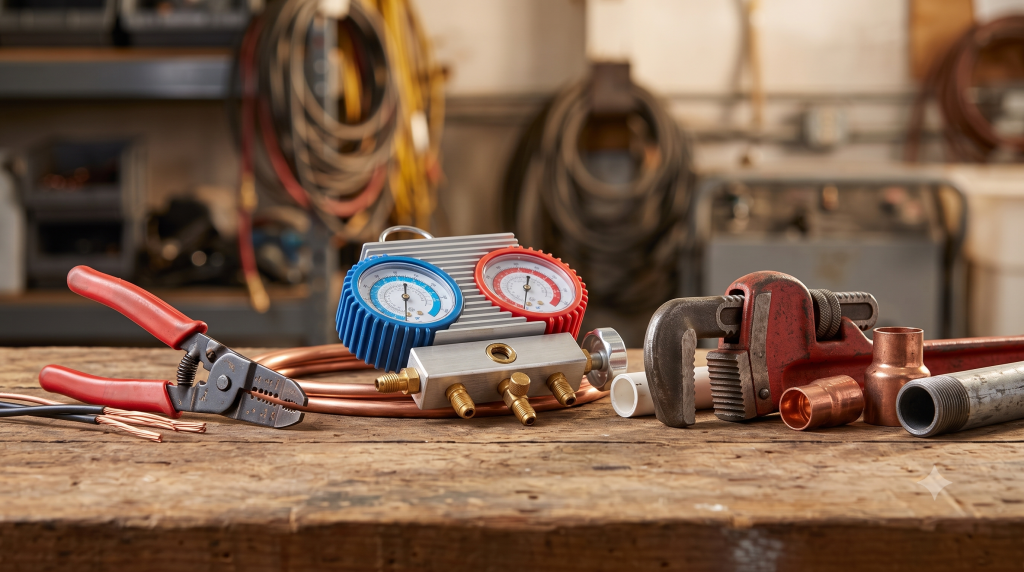
So you’ve decided you want to become an electrician. Or an HVAC technician. Or—even if it surprises some people—a plumber.
With fewer high schools offering skilled trades education (what many of us simply called “shop class”), it can be difficult to know where to begin.
The good news? There isn’t just one path into the trades.
Some paths are faster. Some cost more. Some let you earn while you learn. The best choice depends on your goals, your finances, and the opportunities available where you live.
Here are the three most common ways to get started.
Option 1: Start as a Helper
Many contractors hire entry-level helpers with little or no experience.
The starting pay won’t match that of an experienced technician, but you’ll begin earning immediately while learning the trade. Every day becomes hands-on training, and you’ll quickly discover whether the work is something you enjoy.
HVAC
Most HVAC helpers begin as installation helpers in residential construction or replacement.
The work is physically demanding—especially during the summer—but you’ll gain exposure to a wide variety of equipment in real-world conditions. It’s one of the fastest ways to determine whether HVAC is the right career for you.
With larger companies, it’s not unusual for a first-year helper to earn more than $50,000.
After a couple of years, strong installation helpers are often promoted to Lead Installer positions, which typically come with significant pay increases. From there, many move into Maintenance or Service Technician roles.
Plumbing
Many plumbing helpers begin on water line or sewer line crews, replacing underground piping and performing excavation work.
Other companies train entry-level employees to become drain cleaning technicians. Once someone becomes proficient, drain cleaning can be one of the more profitable entry points into the plumbing industry.
We’ve seen technicians complete a company-sponsored six-week training program and earn more than $70,000 during their first year. That’s certainly the exception—not the rule—but it’s achievable for people with a strong work ethic who are eager to learn.
Many first-year plumbing helpers earn $40,000 or more.
Within one to two years, many helpers have opportunities to move into drain cleaning or other specialized work. After approximately four years of documented work experience, many states allow you to test for your Journeyman (or Journeyworker) license.
Keep in mind that qualifying for the exam requires more than simply accumulating hours. Passing requires solid technical knowledge and practical experience.
Electrical
Electrical work is highly technical and carries significant safety responsibilities.
Because of that, safety training is one of the first things new helpers receive.
As your skills develop, you’ll learn wiring methods, conduit bending and installation, cable tray systems, blueprint reading, troubleshooting, and work involving both low- and high-voltage electrical systems.
Most electrical helpers begin on an hourly wage, often earning around $40,000 during their first year, although pay varies by region and employer. Many companies increase wages as helpers demonstrate competency and master new skills.
One More Thing to Consider
As your career progresses, technical ability isn’t always the only factor that affects your income.
Many residential service companies place a strong emphasis on customer communication and, in some cases, sales. If you’re uncomfortable recommending repairs or discussing options with customers, it may limit advancement opportunities within those organizations.
That usually isn’t an issue during your first year, but it’s something worth considering as you think about your long-term career goals.
Option 2: Attend Trade School
Trade school can be an excellent option, particularly for aspiring HVAC technicians and electricians. Plumbing-specific programs are less common, depending on your area.
Before enrolling, do your homework.
Talk with graduates. Read reviews. Compare tuition costs. Ask local contractors what schools they recommend.
Some trade schools provide excellent training and strong employer connections.
Others simply cost far more than the value they provide.
An Example
We’ve seen affordable online programs that prepare HVAC students to earn their EPA Section 608 certification—the certification required to legally handle refrigerants.
The exam itself is relatively straightforward and is required by virtually every reputable HVAC employer.
On the other hand, we’ve also spoken with individuals who paid $2,500 for a four-night EPA preparation class.
In our opinion, that’s difficult to justify when far less expensive options produce the same certification.
Questions to Ask Before Choosing a School
When speaking with graduates, ask questions like:
- Did the school help you find your first job?
- How closely did the classroom and lab experience match real field work?
- Looking back, was the investment worth it?
- Would you recommend the program to someone starting today?
Also compare tuition carefully.
Some private schools charge several thousand dollars for programs lasting only a few months, while many community colleges offer one- or two-year programs at substantially lower cost.
Be Realistic About Starting Pay
Be cautious of schools that advertise exceptionally high starting salaries.
While quality training certainly has value, many employers still view new graduates as entry-level employees because they haven’t yet gained extensive field experience.
That doesn’t mean trade school wasn’t worthwhile—it simply means that classroom instruction and real-world jobsite experience are different things.
It’s also worth considering the opportunity cost. While attending school full time, you’re typically paying tuition instead of earning a paycheck.
Option 3: Enter an Apprenticeship Program
If you have the opportunity to join a registered apprenticeship program, it may offer the best combination of education and experience.
Many contractors, labor organizations, and government-sponsored programs offer apprenticeships that combine classroom instruction with paid on-the-job training.
In many ways, apprenticeships resemble starting as a helper, but the training is generally more structured and follows a defined curriculum.
The biggest drawback is availability.
Most apprenticeship programs have limited openings, so not everyone who applies will be accepted.
However, completing an apprenticeship often provides a clear pathway toward licensing and long-term career advancement.
Final Thoughts
The skilled trades offer more than just good pay.
They provide stable careers, opportunities to solve real problems, and the satisfaction of doing work that matters. Whether you’re restoring power after a storm, repairing a family’s heating system in the middle of winter, or installing plumbing in a new home, your work has a direct impact on people’s lives.
There is no single “right” way to enter the trades.
Some people begin as helpers and learn everything on the job. Others attend trade school. Others enter formal apprenticeships.
The important thing is choosing a path that fits your goals, doing your research before investing your time or money, and committing yourself to mastering your craft.
The demand for skilled tradespeople remains strong—and for those willing to put in the work, the opportunities are substantial.

